
A clinic uses SMS to remind customers of appointments, while another business sends repeated offers to an unsegmented list, and some recipients start ignoring the messages or requesting they stop. It’s the same channel, but the objective, consent, timing, message, and measurement method determine how useful it actually is.
What Is SMS Marketing?
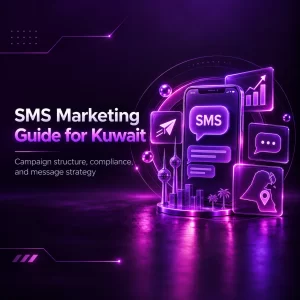
SMS Marketing is the use of short text messages to send targeted marketing communication, such as an offer, re-engaging a customer, or a reminder tied to a campaign. The same channel can also be used for transactional messages, like an order confirmation, shipping update, or appointment reminder — but those differ from marketing in objective, content, consent, and measurement method.
The Difference Between Marketing Messages, Transactional Messages, and General Alerts
- Marketing messages: Aim to promote, encourage repeat purchase, or present an offer.
- Transactional messages: Tied to an order, booking, or action expected from the customer, such as an order confirmation, shipping update, or appointment reminder.
- General alerts: Important information related to the service, such as a schedule change or an update affecting the customer — provided they don’t turn into a disguised promotional offer.
A transactional message the customer is waiting for shouldn’t be turned into a crowded promotional message, because their expectation and their reason for receiving it are different.
When Is SMS Useful?
- A reminder tied to an appointment or booking.
- A brief update about an order or service.
- A specific, clear marketing message for an audience that consented to receive it.
- Re-engaging an inactive segment under clear rules.
- An alert that needs a short format and doesn’t require explanation or a long conversation.
When Might SMS Not Be Suitable?
When the message needs lengthy explanation or rich visual content, or when your target audience prefers WhatsApp or email for detailed communication.
The Difference Between SMS, WhatsApp, and Email
| Element | SMS | ||
|---|---|---|---|
| Format | Usually a short text | A conversation with text and media | Detailed content, links, and design |
| Closest use | A brief reminder or alert | Conversation, qualification, and follow-up | Periodic content, education, and retention |
| Reply capability | Depends on sender type and solution | Usually available | Available, but not always the primary path |
| Core limitations | Length, segments, telecom policies | Platform policies, templates, consent | Deliverability and domain reputation |
| Best used when | There’s one clear message | Two-way interaction is needed | Broader explanation is needed |
No channel is best in absolute terms; a business may use more than one, provided each has a clear role and the customer doesn’t receive the same message repeatedly across all of them.
The Importance of Obtaining Clear Consent
For marketing messages, the business should have a clear, documented basis allowing use of the number for this type of communication, with clarity about what the customer will receive. Kuwait’s requirements and the policies of telecom companies and your sending provider should also be reviewed, since requirements may differ by message type, sender, and sending method.
The Importance of Complying With Local Regulations and Provider Policies
Using text messages for marketing purposes is subject to local regulations and provider policies. This article does not provide legal advice, and specialized review is recommended when the legal position isn’t clear.
The Need for a Clear Way to Stop Messages
A clear mechanism should be designed for recording a request to stop marketing messages and preventing any later unauthorized sending. The mechanism may be a reply keyword, a link, or a customer service channel, depending on the sender number type, the provider’s capabilities, and applicable requirements.
Not every Sender ID can receive replies; alphabetic sender IDs are usually used for one-way outbound messages, and may require prior registration in some markets.
Sender ID, Explained
Sender ID is the name or number that appears as the message’s sender. A clear business name may help the recipient recognize who is contacting them, but availability, registration requirements, and reply capability vary by market, telecom company, and provider. Some text sender IDs are send-only, so an alternative path for contact or unsubscribing should be defined when needed.
Segmentation
Sending the same message to your entire customer base without distinction reduces its relevance; segmenting by several factors raises the likelihood the message reaches someone who actually cares about its content:
- Type of relationship: new, existing, or inactive customer.
- Type of service or category they showed interest in.
- Language when needed.
- The branch or region tied to the service.
- Consent status.
- Those who stopped messages or whose numbers are no longer valid.
Medical, financial, or sensitive personal data shouldn’t be used in campaign segmentation or message content without a clear need, permission, and controls.
Timing and Frequency
Timing should be set according to the message’s nature, business hours, time zone, and customer expectations. Opt-outs, complaints, and results should also be monitored, instead of committing to a fixed frequency for all segments.
Message Length and Encoding
A single SMS may be split into several segments when it exceeds a certain length, and each segment may be billed separately depending on the provider. Using Arabic, unsupported symbols, or emoji may change the message’s encoding and reduce available characters per segment. So the text and its segment count should be checked before sending — not just the word count.
Checking the encoding matters even more when mixing Arabic and English or using symbols inside the same message.
Writing the Message
The message should include the sender’s identity, the reason for contact, the core information or offer, a clear call to action, and a way to stop marketing messages when needed. If it includes a link, prefer a clear domain the company owns or a recognizable trusted link, rather than a vague generic one.
Avoid cramming the message with several competing offers, links, and actions, and review how language and symbols affect the SMS segment count.
Connecting With CRM and Marketing Automation
Connecting SMS with CRM or Marketing Automation allows sending messages tied to an event or stage, such as an upcoming appointment, a change in order status, or re-engaging a specific segment. But the system must store consent status and stop requests, and prevent marketing messages going to anyone no longer permitted to receive them. Details on this within a broader system are covered in our guides to what Marketing Automation is and why you lose leads after ads.
When communication needs longer content and an extended retention series, email may be more suitable, as explained in our guide to building Email Marketing campaigns to increase customer lifetime value (LTV).
Practical Examples
- Restaurant: A reminder about a limited offer or upcoming event.
- Clinic: An appointment reminder using the minimum necessary information, without including a diagnosis, treatment, or sensitive medical information in a message that may appear on the phone screen.
- Gym: An alert that a membership is expiring soon, with an invitation to renew.
- Online store: A shipment update or a time-limited offer.
- Local service: Confirming a scheduled appointment or service.
How Do You Measure Performance?
Useful metrics include:
- Sent: Messages the system attempted to send.
- Delivered: Messages the provider or operator reported as delivered — which doesn’t mean they were read.
- Undelivered or Failed: Messages that weren’t delivered, with failure reasons reviewed.
- Clicks: Clicks when a measurable link is used.
- Responses: Replies when the sender type supports them.
- Bookings or Purchases: Business results tied to the message according to the measurement method.
- Opt-outs: Requests to stop messages.
- Cost per Result: The cost tied to a booking or purchase, not the sending cost alone.
Sending documentation explains that SMS supports states like sent, delivered, and undelivered through delivery receipts, while a read notification is only available on other channels that support it. So Delivered doesn’t mean the recipient read the message.
The Difference Between Bulk Sending and Event-Based Sending
Bulk sending: A planned message to a defined segment at one time — which doesn’t necessarily mean sending to the entire customer base.
Event-based sending: A message triggered by an action or appointment tied to a specific customer, such as an approaching appointment or a change in order status.
Both types need clear rules for consent, segmentation, frequency, and measurement.
Table: Situation, Message Nature, and a Possibly Suitable Channel
| Situation | Message Nature | Possibly Suitable Channel |
|---|---|---|
| A brief appointment reminder | Transactional and specific | SMS or booking channel |
| An inquiry needing discussion | Two-way communication | WhatsApp or call |
| Lengthy educational content | Detailed content | Email or content page |
| A specific offer for a consenting segment | Brief marketing | SMS depending on context |
| An order update | Transactional | SMS, email, or WhatsApp |
Common Mistakes
- Buying ready-made number lists instead of building them with genuine customer consent.
- Sending without clear prior consent.
- Writing vague messages that don’t clarify the sender or the purpose.
- Excessive repetition that annoys the customer and raises opt-out requests.
- Sending at an inappropriate time (very early or very late hours).
- Using an untrusted link within the message, which may reduce customer confidence.
- Measuring success by messages sent alone without looking at an actual result.
- Sending to the entire database instead of a segment.
- Not storing stop requests in the CRM.
- Using a Sender ID that cannot receive replies, then asking for a reply.
- Sending sensitive personal or medical information within the message.
- Not reviewing the SMS segment count before sending.
- Using symbols or emoji that make the message longer or more expensive without need.
- Considering Delivered proof of reading or interest.
- Repeating the same message across SMS, WhatsApp, and email at the same time without reason.
Frequently Asked Questions
Does SMS guarantee the message reaches every customer?
No. Delivery depends on technical and network factors outside any party’s full control, and reaching or being read can’t be guaranteed at a complete rate.
Can marketing messages be sent to any number the company has?
Having the number in your database doesn’t automatically mean it’s suitable for every marketing use. You need to know why it was collected, the consent status, market and provider requirements, and to offer a clear opt-out method. When the legal position isn’t clear, consult a specialist or an accredited provider.
Is SMS better than WhatsApp for marketing?
There’s no fixed rule; the choice depends on message type and audience. SMS may suit short, specific messages, while WhatsApp may be more suitable when communication needs dialogue and broader interaction.
How often can marketing messages be sent to one customer?
There’s no single frequency suitable for all businesses. Monitor message usefulness, clicks, conversions, opt-out requests, and complaints, and separate necessary transactional messages from optional marketing campaigns.
Can SMS be connected to an existing CRM?
Yes, this is possible in many solutions, and it allows sending messages built on the customer’s stage or behavior rather than random bulk sending only.
Can a customer reply to a Sender ID?
Not always. Some sender types, especially a text Sender ID, are one-way and don’t receive replies. Confirm the capabilities of the solution used and provide a clear alternative channel when needed.
Can an Arabic message count as more than one SMS?
Yes. Using Arabic or symbols unsupported in GSM-7 encoding may trigger Unicode, and as the text grows the message may split into several segments. The final bill depends on the provider, the market, and the calculation method.
Ready to Talk to Zain Media?
Zain Media is a digital marketing agency based in Kuwait, founded in 2015.
If you’re thinking about using text messages within customer communication but aren’t sure how best to organize it, Zain Media can help you integrate SMS with WhatsApp, email, and CRM within a complete Marketing Operating System, instead of running each channel separately.